Google Beam’s 3D family calls are heading to 20 USO locations
Video calls are very good at getting a face onto a screen. Getting the small gestures and sense of sitting together across the distance is a trickier assignment. Google is giving that problem some rather substantial hardware, and a new deployment with a clear human purpose.
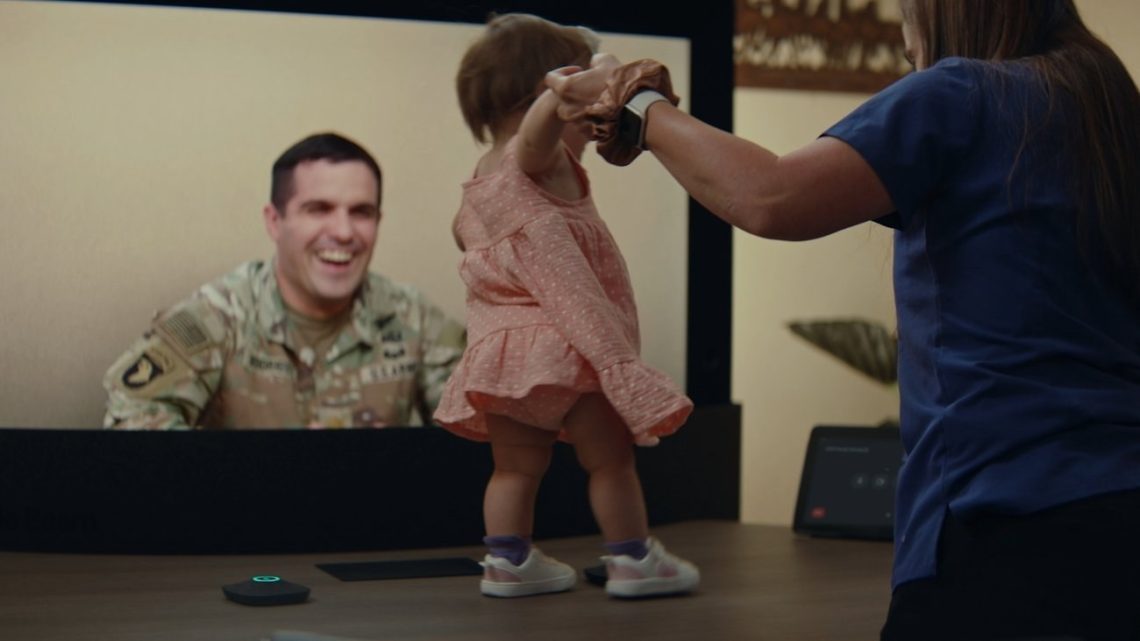
On October 26, Google said it and the USO are bringing HP Dimension with Google Beam to 20 locations worldwide, helping deployed service members connect with their families through 3D calls. Google also released a docuseries following four military families using the technology.
A larger deployment, following an earlier pilot
The program began with calls between Trzebień, Poland, and Fort Bliss, Texas, earlier this year. Google now describes expansion to Grafenwöhr, Germany, and Fort Hood, Texas. Its announcement does not provide a complete list or confirm that every one of the 20 locations is already operating.
That timing matters if you are hoping to use it. This is an expansion through USO locations, so the next practical step is checking the arrangements at the relevant centre. A worldwide location count is encouraging; it is not a booking confirmation tucked into a press release.

What makes a Beam call different?
HP’s hardware explanation describes six-camera capture, a 3D light-field display, adaptive lighting and spatial audio. The system is designed to preserve depth and natural eye contact without making participants wear a headset or special glasses.
That is the interesting bit. The equipment carries the technical burden while the people sit down and talk. Nobody needs to persuade a child to keep an expensive face computer perfectly in place before saying hello. We respect any design choice that removes an extra family negotiation.
Our look at Apple Vision Pro’s original spatial-computing pitch explores a different way to put digital experiences around a person. Beam concentrates on the conversation across a table.
A flat photograph of its screen cannot demonstrate the full 3D effect. The official images here show the setup and participants; they are not our test results, and the family films are Google’s presentation of the program.

Dedicated equipment, with practical limits
Beam also has a separate business rollout. In its September update, Google said units were shipping in the U.S., Canada, the U.K., France, Germany and Japan, with Google Meet and Zoom integration. It also described access through selected Industrious workspaces in several U.S. cities.
Those enterprise arrangements should not be confused with the USO program. Today’s news does not turn a normal laptop webcam into a Beam terminal or announce a home edition. For everyday tools alongside these specialist systems, our Software & Services coverage follows the apps and services people use on existing devices.
The takeaway is pleasantly concrete: more places are getting dedicated equipment for a particular kind of call. The worthwhile question is whether it makes those conversations easier and more natural in practice. The deployment gives more families a chance to find out.
Hero and inline images: Google, from its official announcement. DeviceCritique has not tested Google Beam.


You May Also Like
iPhone 15 Pro heat reports: the software fix and sensible checks
iFixit gives iPhone Duo a provisional 5/10, with hinge questions still open