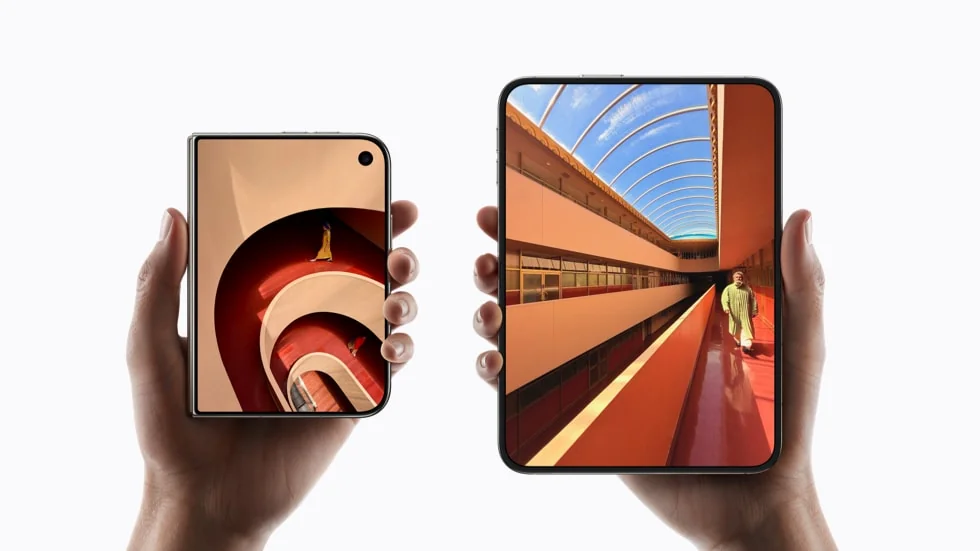
iPhone Duo vs Galaxy Z Fold8: which foldable fits your day?
The foldable-phone argument has escaped the group chat and acquired a shopping tab. In the US Google Trends technology chart checked October 25, “Samsung Galaxy Z Fold 8 vs iPhone Duo” showed 20K+ searches in the past-seven-days view, with a reported 400% rise. The chart marked that spike as ended. That is a search-interest snapshot, not a sales chart or a verdict. People are asking which one makes sense. Fair question; these little folding rectangles are asking for a serious relationship.
Our iPhone Duo launch report covers Apple’s October 23 arrival. This comparison answers the next question: which trade-offs belong in your bag? We have not tested either phone side by side.
First, compare the right Samsung
Samsung sells a Galaxy Z Fold8 and a separate Fold8 Ultra. This article compares the ordinary Fold8 with iPhone Duo. Borrowing the Ultra’s bigger screen or camera specifications would make a wonderfully dramatic comparison and an entirely unhelpful shopping list.
The following are Apple’s published specifications and Samsung’s Fold8 specification table. Display measurements are diagonal; rounded corners reduce usable area.
| Detail | iPhone Duo | Galaxy Z Fold8 |
|---|---|---|
| Inner display | 7.6-inch OLED | 7.6-inch AMOLED |
| Cover display | 5.4-inch OLED | 5.5-inch AMOLED, full rectangle |
| Weight | 254g | 201g |
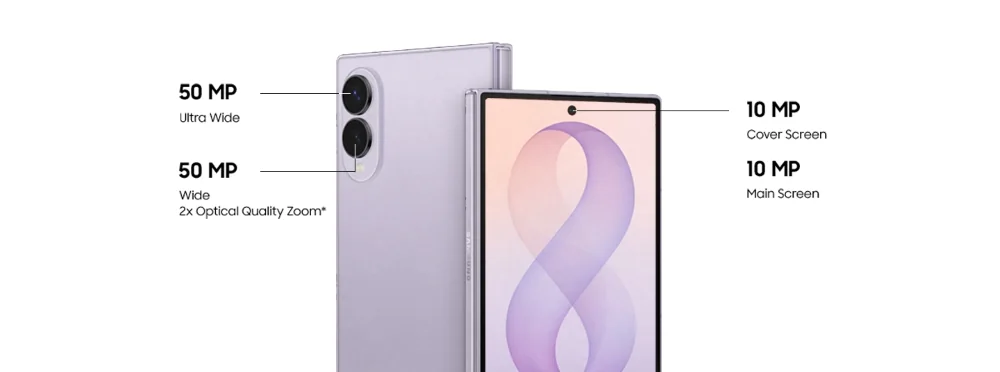
| Rear cameras | 48MP main and 48MP ultra wide | 50MP wide and 50MP ultra wide |
Samsung is 53g lighter on these published figures. Whether that matters to you is a handling question, not a personality test. Try the closed phone, reach for the controls and imagine carrying it through an ordinary day. The hinge should not require you to become a part-time device concierge.
Make the big screen do something useful
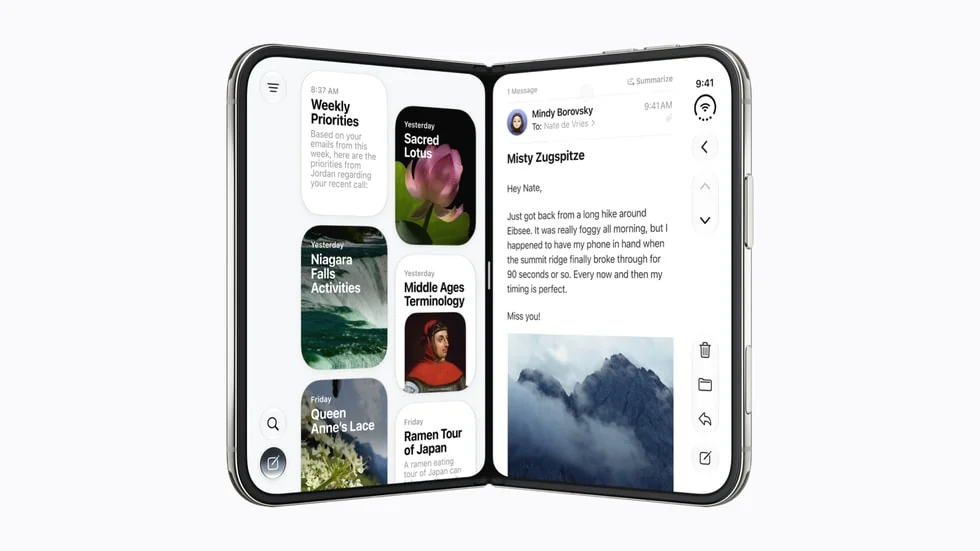
Here is the bit worth trying in a shop. Open the two apps you would actually use together: a recipe and a shopping list, a document and a message, or a map beside your very optimistic itinerary. Check text size and whether the controls remain comfortable. A larger canvas only helps when your apps arrange themselves sensibly.
Apple’s October walkthrough describes iOS 27 Split View, adapting layouts and StandBy on either display. Samsung describes Fold8’s main display as approximately 4:3 and its cover as 10:16. Those are useful starting points for a demonstration, not evidence that every third-party app behaves perfectly.
The ecosystem can cost more than the case
Before changing camps, list the accessories, paid apps and services you would need to replace or check for compatibility. Then price the same storage tier locally, including tax, a suitable case and the repair coverage you actually want. A monthly payment deserves a total-cost calculation. It does not become pocket change because a website put it in a smaller font.
Camera megapixels cannot settle this decision, either. Compare sample photographs from trustworthy testing, especially the subjects and lighting you care about. We are not awarding a camera winner from two specification tables wearing their best launch-day outfits.
Our buying filter is straightforward: start with Duo if staying within iOS matters most; start with Fold8 if Android fits your routine and its lighter published weight appeals. If neither big screen solves a recurring annoyance, keep your current phone. Our smartphone coverage will still be here when the upgrade has a job to do. The nicest fold is the one that earns its place, not the one that wins an argument at 1 a.m.
Hero photograph: Apple, showing iPhone Duo folded and unfolded. Official image source. Specifications and search snapshot checked October 25, 2026.


You May Also Like
Sony releases a stability update for BRAVIA 6 A60 televisions
Bose QuietComfort Ultra: what the original headphones promised